Build Stuff
Getting Started
Every week I receive emails from people asking "How do I get started?" Indeed, there is a lot of basic knowledge that can be a big barrier to the pure unadulterated orgasmic joy of building your first working pedal or device. With that in mind, here's a page that hopefully gives you a set of ideas, or road map, for rolling up you sleeves and getting started.
|
Table o' Contents |
|
 |
First Build: Kit or Not |
|
|
Setting Up Shop: Tools and Supplies |
|
|
Build Your Kit |
|
|
Expand Your World |
|
|
Build More Stuff |
|
|
Build More Core Knowledge |
|
|
Getting Parts |
|
|
The Well Stocked Shop |
First Build: Kit or Not?
I'm a very strong believer that your first build should be a kit. There are simply too many variables in doing it otherwise. Why?
First thing is the printed circuit board. With a kit, you get a PCB already to go. On your own, you either have to source a PCB, or do it on perfboard (not fun for beginners), veroboard (a little better, but still not ideal for your first time) or etch your own board (a whole can of worms that, trust me, you don't want to get into right away.)
Second problem in going it solo on your first flight is parts: there are a bewildering array of resistors, capacitors, pots, chips, etc. Getting your parts order down without a little experience is going to be frustrating. Indeed, the first bunch of parts I ordered from big shops like mouser.com were disasters, just getting the right pot type took a lot of tries and a lot of cash.
Third, a kit is going to get you from zero to hero a lot quicker, and having that first working build in days or weeks instead of months will go along way to making you feel a real sense of accomplishment.
But wait, aren't kits for noobs? Yes, they are. I'm still a noob in a lot of ways, and I still think kits are great. I still build them.
Ok, so you want to build a kit, where to go? The good news is that there are several companies that will make you very happy. Visit these sites and choose a kit that interests you, but doesn't have a huge part count.
Setting Up Shop: Tools and Supplies
For your first effort, there are some basics you'll need. If you are just testing the waters, procure just a minimal set of stuff. If you are compulsive and/or crazy, you can buy all sorts of tools and parts that you may someday need--how far you go is up to you.
-
Soldering iron: pencil type, around 25 watts is good. Those big-ass soldering guns are not going to work, neither or those stupid Cold Heat anal devices. Pencil type. You can get a cheap iron at Radio Shack that will get you going. It won't last too long, but will do the job. If you want to get something that will last, look at Weller irons, or my personal favorite for cost/performance: http://www.circuitspecialists.com/prod.itml/icOid/7501.
-
Get some solder too (the rosin kind for electronics) and finally some de-soldering braid.
-
Polish you soldering chops. Most mistakes/non-working builds are caused by soldering, not enough solder on a joint, cold solder joints, too much solder that makes a blob and shorts things out, etc. There are soldering tutorials all over the web. Practice soldering, it is a core skill, and anyone can do it well with a bit of practice.
-
A Good Multimeter--this really is key. Too many people start off without having a multimeter or having one but not really understanding how to use it. You want a digital meter that will, at a minimum, do AC and DC volts, amps, and ohms. You'll be even happier if you get a meter that does capacitance and has a transistor HFE tester. The good news is that a good meter with those features is fairly inexpensive.
-
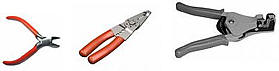
Pliers/Cutters: a pair of needle-nose pliers and some good wire-strippers are key
-
A work surface that you don't mind getting burns n' stuff on.
That's the basics. We'll talk more about tools and supplies later on.
Build Your Kit
Using the kit you ordered and your basic shop, build the pedal. Pretty easy right? Don't be frustrated, mistakes will happen and it is likely your first attempt will need some fixes. Go slowly, relax and take your time. Give it a break, or go ask for advice on the interwebz. BuildYourOwnClone has a great message board and the other companies do a good job of helping too.
Once you have built your kit, you'll have a basic familiarity with some key concepts:
-
Populating a circuit board and what resistors, caps, and other parts generally look like
-
Wiring pots
-
Jacks and switches
-
The general arrangement of pedal powering and true-bypass switching
-
Solder burns hurt
Don't worry if you don't understand how the circuit works, that will come later. But you have already amassed some key experience and background that will serve you well as you move forward.
Next Steps
Ok, did you have fun? Are you hooked? Want to go further? Well fear not, I have lots of ideas and tips for the next stage.
Expand Your World
The popularity of pedal DIY is fueled by the abundance of resources on the web. Here are some great places that should be part of your regular reading:
-
DIY Stompboxes Forums: The number one place for stompbox building. A well-moderated set of forums that will cover just about every topic you'll ever want to know about. Read the posts every day and you'll learn gobs.
-
Geofex: R.G. Keen's treasure-trove of info. Lots of articles and projects there.
-
Muzique.com: Jack Orman's site and blog. As with geofex, an incredible resource.
-
Freestompboxes.org: a raucous place that rips apart all the boutique designs and lays them bare for you to learn from.
-
Experimentalists Anonymous: a great site for electronics, DIY synths, and effects.
There are literally hundreds of other sites and blogs, and you should be able to find the ones you like by starting with the list above.
Another thing to remember, when you get on these boards, don't just lurk. Join and share, post questions, share your experiences. It is much more fun that way.
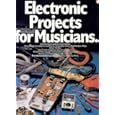
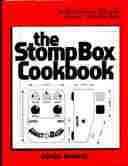
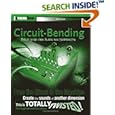
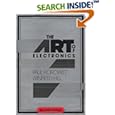
Finally, some great books:
 |
 |
 |
 |
 |
 |
 |
 |
 |
 |
Build More Stuff
If you are reading this far, I'll assume you had fun and want to do more. Here are some ideas for next steps that will build on you previous experience.
-
Build Another Kit. If you really enjoyed the kit building experience, do more. Lots of folks build entire pedalboards from kits. Choose one with a higher parts count.
-
Mod a Pedal: have an existing pedal you want to modify? That's great fun to because you learn how to de-solder existing components and re-wire stuff. One of the most common mods is to change clipping diodes in a fuzz, overdrive, or distortion and it is a pretty easy start to modding.
-
Do your first perfboard/stripboard build: There are lots of projects on diystompboxes.com (look for their gallery pages) that use stripboard or perfboard. You can choose from literally hundreds of designs. You'll have to learn about sourcing your own parts, but it can be very rewarding.
-
More cool layout stuff: DIY Stompboxes Gallery. Also check out Bancika's great site. He created DIY Layout Creator, an incredibly easy to use program that makes desiging layouts easy. Plus his site has a huge library of layouts you can download. And its all free. What a cool guy.
Build More Core Knowledge
As you progress, there are some basic electronics things you'll want to learn. During your quest, try to set aside some time for learning and research.
-
Buy or borrow me basic electronics books. Learn about ohms law, how basic circuits work, types of components, and techniques. Those Dummies/Complete Idiot guides are a great way to start.
-
Learn how to read schematics: This is a really important skill. The easiest way is to Google it, then learn what the basic symbols are, and then the patterns you will see over and over again. If you started with a kit, go back and open it up and compare the physical PCB against the schematic. You'll see a lot of very cool designs presented only in schematic form, so understanding what it means is pretty important.
-
There is way more to electronics than stompboxes: Move outside of stompboxes, learn about amps, and signal generators, and synthesizers, and timers, and CMOS stuff, and microprocessors. All the things you learn from other areas of electronics will allow your creative ideas to cross-pollinate from other walks of life. Check out make.com/blog for interesting ideas, along with general electronics forums and sites.
Getting Parts
Here are some strategies I've found useful when it comes to parts.
| Buying Parts | |
| Order from SmallBear | Ok, why Smallbear? Because the parts there are specifically chosen for stompboxes. If you need a pot, there is a really good chance you'll get the correct type. Try that with mouser.com or digikey.com; they have thousands of pot types, and unless you know exactly how to read datasheets and get the correct value/tolerance/physical size part, you are going to be frustrated. SmallBear has a great selection of parts at reasonable prices. Start there first, especially when you are starting out. |
|
|
|
| Get Catalogs | Get catalogs from mouser.com, digikey.com, and alliedelec.com. They'll send you big phonebook sized catalogs for free. Great reading material and you'll quickly see the huge variety of parts. |
|
|
|
| Surplus Sites | Surplus sites can offer great deals on various parts. |
|
|
|
| Don't Forget EBay | Lots and lots of parts available on ebay. Do your research and you can find some good buys from reputable dealers. |
|
|
|
| Quick List | Here's a quick list of web-based retailers: |
| Big Guys, bazillions of parts | |
| www.mouser.com | |
| www.alliedelec.com | |
| www.digikey.com | |
| Medium Guys, lots of parts | |
| www.jameco.com | |
| www.futurlec.com | |
| www.banzaieffects.com | |
| Stompbox/Audio Specific | |
| www.smallbearelec.com | |
| www.pedalpartsplus.com | |
| www.effectsconnection.com | |
| Great Surplus Sites | |
| www.allelectronics.com | |
| http://www.goldmine-elec.com | |
| http://www.action-electronics.com | |
| Also, check out my BNVR page for random links to cool parts places | |
| Brick and Mortar | |
| Search locally | Some larger areas do have shops that stock parts. This is hit or miss, but with a little digging, you can find some treasure troves. Check google local and your local yellow pages. Ask around. |
|
|
|
| Radio Shack | If you are in the U.S. there is a good chance you are near a Radio Shack. Many shacks have parts bins. The selection is limited, the quality is often suspect, and the prices are higher than buying online. But Radio Shack can be a great resource for basic tools, some passives, switches, etc. Don't be afraid to browse and learn what your local Shack has to offer |
| Building a Collection | |
| Order more than you need | If
you are building a circuit that needs 2 100K
ohm resistors, order 10. Why? because you
may break one. There is nothing more
frustrating than being deep in the heat of
building battle to find you can't move
forward for want of a 5 cent resistor. Another reason to order more than you need is that it allows you to build a collection of parts that will come in useful as you build more stuff. |
|
|
|
| Storing and Organizing | FInd a way to store your parts efficiently. Look at multi-drawer plastic organizers. Label the drawers. For resistors, you might want to have small envelopes for each value. Organization skills aren't my strong point, but I've found that good organization is the key to building fun. |
Also, check the top section of links on my home-page. There are articles about pots, wiring, caps, etc.
A Well-Stocked Shop
In the section about titled "Order More Than You Need", we talked about the concept of building a good parts bin. That, plus tools allows you to create a well-stocked shop. The key advantage is over time, you'll build up the stuff you need to build most common circuits, with only minimal ordering of parts for specific projects. Here are some lists to help you get started.
Parts
| Batteries |
You'll need 9 volt batteries. See later on
this page for info on power supplies which
are great and save on batteries) but you
will always want to have 9 volts laying
around. Only chumps buy batteries retail. The markup is unbelievable. Buy them through online wholesalers. |
| Capacitors |
Capacitors are one of the most common
components used in stompboxes. They are also
fairly cheap, so you'll want to build a
collection of the most common values. Low-value ceramics: small caps in the picofarad range. These are dirt-cheap, and you can get assortments pretty easily. Look for assortments on ebay and jameco.com. Here's a great collection from smallbear. Mid-value poly film: the most common type you'll use. As with ceramics, having 5 or 10 of the most common values is always good. You can get assortments from various places, or buy single value parts. Here's a great collection from smallbear. Electrolytics: get a bunch of radial electros in values from 1uf to 100uf. The brand and type isn't really key on electrolytics. Collection. |
| Chips | For chips, the most common parts are opamps. A small collection of single and dual opamps will be a welcome part of your collection. Consider TL071/072, TL081/082 and the JRC4558 parts. You may also want to stock some small power amps for various projects, like the LM386 or JRC386. Of course, there are bazillions of chips out there, but this selection will be a good starter. |
| Diodes | You'll want some small signal diodes like 1N914 for various projects. Germanium 1N34A are good for vintage type tones. Also stock up on 1N400x diodes, they are very useful for power supplies |
| Enclosures | The most common enclosures you'll run across in stompboxes are the Hammond 1590 series. It's always nice to have a few 1590B, 1590BB or the MXR-size enclosures around for your next build. PedalPartsPlus and SmallBear both have great selections of enclosures. |
| Jacks | 1/4" stereo and 1/4" mono are the in and out jacks for just about every stompbox out there. Get some switchcraft 12A and 12B parts, they are inexpensive and top quality. For power plugs, you'll want a supply of 2.1mm plastic jacks (not metal). |
| Knobs | Almost every stompbox you build will have at least one pot. And every pot needs a knob. Check out my knobs page for a lot of good ideas and sources. (On a personal note, I am a knob freak, and collect them in an almost rabid fashion). |
| Pots | In general, the most common pots you will use are 16mm single-gain pots. Alpha is the most commonly used manufacturer for these. Have a supply of common linear values (1K, 10K, 25K, 100K, 500K, 1M) and common audio taper values (10K, 100K, 250K, 1M). |
| Resistors | You'll want 5% tolerance metal film. You can do 1% tolerance with no problem, but 5% is a bit easier to read color-code-wise and is standard in most stompboxes. The best thing you'll do for your shop is to order a selection of values. They are dirt cheap and super easy to buy. Like these from Smallbear: 1 2 3 4 |
| Sockets | Transistors and chips can fit into sockets instead of soldering them directly to the board. Key advantages here are, when you screw up, it is easier to pop a chip out of a socket than to desolder it. Also, it allows you to taste-test different types of transistors or chips as you build stuff. Get some 8-pin dip sockets for your opamps and some strip sockets for your transistors, diodes, caps, etc. |
| Switches | Almost every stompbox is going to need a 3PDT switch. You can get them dirt cheap at pedalpartsplus.com. 4 bucks the last time I checked. Having a basic collection of SPST, SPDT, and DPDT toggle switches on hand really helps when you are doing more interesting designs, or perhaps modding pedals. |
| Transistors | Every shop should have a basic collection of bipolar silicon transistors. Look through schematics and projects to find the most common. I typically like the have 2N3904, 2N4401, 2N5088 and 2N58089 parts on hand. Also a collection of FETs like the J201, MPF102, and BS170 are good. Finally, germanium transistors are pretty much a requirement for older vintage designs. But they are usually too pricey to justify a large collection. Also, consider a smattering of MOSFETs for fun. |
| Wire | I've been through lots of wire choices, almost all of them lacking in one aspect or another. I have settled on #24 pre-bond. I order multiple spools in different colors. This wire is great: it is pre-bonded which means that after you strip it, the individual strands are still held together. It is flexible and forgiving, and the gauge is perfect for stompbox use. Having multiple colors on hand is invaluable because it allows you to color-code things as you wire them. Try doing a complex pedal with nothing but white wire, I guarantee you'll be frustrated :) |
Tools
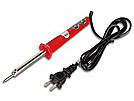
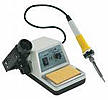
| Soldering Iron |
The most important tool in your stompboxery
shop. You can start out with a cheap pencil
type iron.
As you move on, you'll want a better unit with adjustable temp. Look at Weller, Xytronics, etc.
|
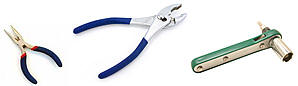
| Pliers |
Get a good pair of needle-nose pliers. Also
a regular set of pliers is great for nuts.
To make certain things easier, a set of
socket drivers is also good.
|
| Cutters & Strippers |
You'll be cutting and stripping a lot of
wire. Invest in a good set of
cutter/strippers. The standard
one-size-fits-all strippers are crap. Get a
pair that have different slots for different
wire gauges. Some people like those
semi-automated strippers, so give them a try
if you want to.
|
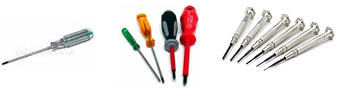
| Screwdrivers |
A basic set of slotted and phillips head are
good. Also get set of smaller jewelers type
screwdrivers, they come in handy.
Also, some of the collection types have a great array of useful bits like torx, hex, etc.
|
| Razor blades |
Not a lot of people do this, but I keep a
big box of utility razor blades around. I
use them constantly because they are very
sharp and allow precise cuts. Not incredibly
safe, but incredibly useful. |
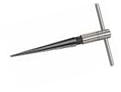
| Tapered Reamer |
Great for enlarging holes
|
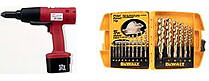
| Drill and Drill Bits |
Electric hand drill and a box of bits.
If you have access to a drill press, all your drilling will be faster, funner, and much more accurate. Check out Harbor Freight for some great deals.
For drilling PCBs you can also look at Dremel Drill Presses. |
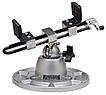
| Helping Hands |
These are great for holding small parts or
entire boards as you work on stuff. You can
start cheap at Radio Shack or online...
and move up to much more high-end with PanaVise gear:
|




Test Equipment
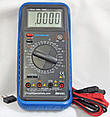
| Digital Multi Meter (DMM) |
Almost as indispensible as your soldering
iron. Look for a digital multi-meter that
has the usual ohms, volts, amps, etc. but
also good is capacitance, transistor/diode
testing, and an audible continuity meter.
Here's a great buy:
|
| Audio Probe |
This device simply puts out an audio signal.
It is indispensible for tracing faults in
stompboxes. You can build or buy.
|
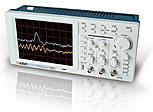
| Scope |
This may come later, but as you progress in
your building skills and the complexity of
your projects works upward, a scope can
become the indispensible tool for your
bench. You can get used ones all day on
eBay. There are also cheap new ones, and
some newer LCD display models that are
pretty cool. You can also buy a
computer-based scope that connects to your
PC. Here's the one that I use:
|
| Bench Power Supply |
For simple stompboxes, a set of 9v batteries
works great. But as you build more stuff,
perhaps with other voltage requirements, a
dedicated power supply can really help. Some breadboards also have power supplies built in. |


This work is licensed under a Creative Commons Attribution-NonCommercial-ShareAlike 4.0 International License.