The Noisy Cricket Guitar Amp
Nine volts of steaming power...
- with a 9 volt battery? Check!
- 386 power amp chip? Check!
- $20-30 total budget? Check!
- Powers a 1x10 cab up through a 4x12 cab? Check!
- Ultra-low wattage so you can rip out the shred while the baby sleeps?Check!
The ubiquity of small cheap guitar practice amps entered the world of DIY through the LM386/JRC38 amplifier chip. This simple chip offers good performance, minimal support parts and is available in a range of version, some which can handle up to 18 volts DC and put out over a watt of power.
This great chip has spawned the commercial Smokey amp, and various great practice amp projects from runoffgroove.com such as the Ruby and the Little Gem. (More about my Ruby builds here). Years ago, I built a Ruby using a PCB from GeneralGuitarGadgets. It was quite easy to build and I was amazed that a 9v battery into a 386 chip could easily power a 4x12 guitar cab. But as always, there were mods to be tried.
The Noisy Cricket Mark I
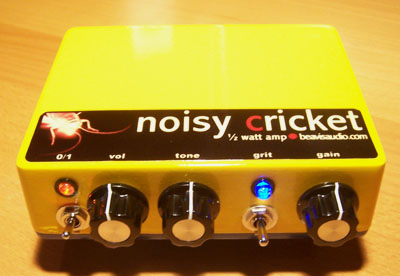
After a many evenings of experimenting, I ended up with the Noisy Cricket Mark 1. Built into a simple Hammond enclosure, the Noisy Cricket added a simple tone control, and grit mod for getting just a bit more sizzle. I built quite a few Noisy Crickets for folks who wanted one. But I met even more people who wanted to build their own. So several DIY versions have been available.
Noisy Cricket Mark I General Specifications
- Power Amplifier: LM386N1
- Power supply 9 - 18 volts DC
- Power Output: .6 watts in an 8 ohm load
- JFet input buffer from Jack Orman's buffer design page.
- Hammond 1590-D enclosures, spray painted with a variety of hardware store enamels.
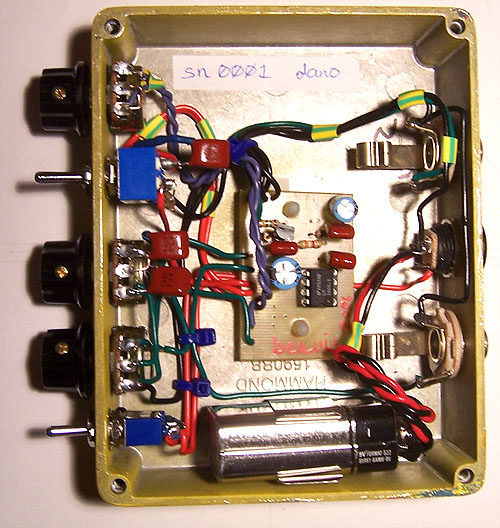
- Tone control caps mounted directly on the tone pot.
- Zealous overuse of heat shrink tubing.
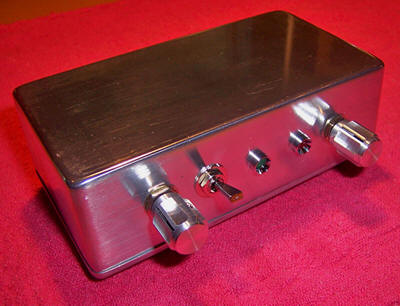
Here's the first prototype build of the Noisy Cricket with the just the Grit boost switch: (This pedal is now in the collection of Richard Guy at www.guytronix.com super nice guy and awesome amp kits!)
The first run sold out in one day. I was surprised and pretty stoked at the same time.
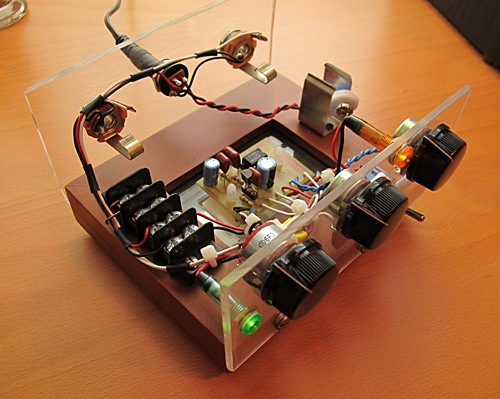
I even built one out of an old picture frame.
Production Run 2
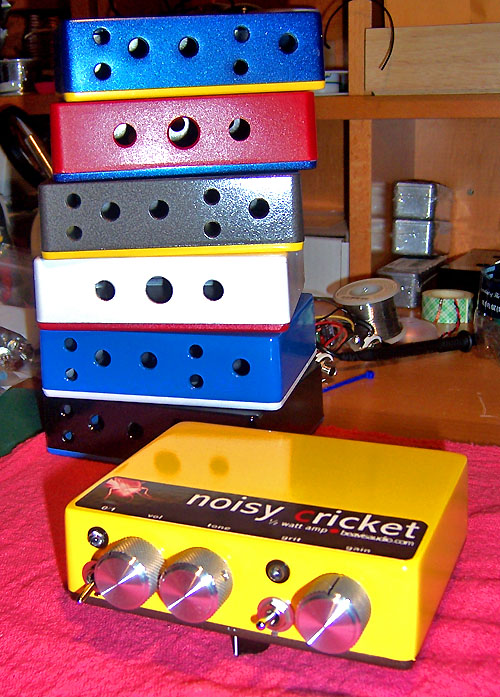
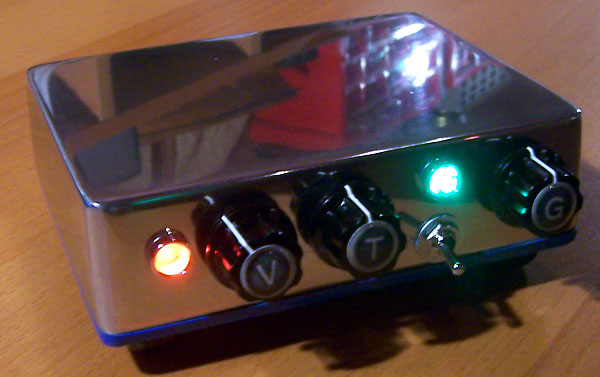
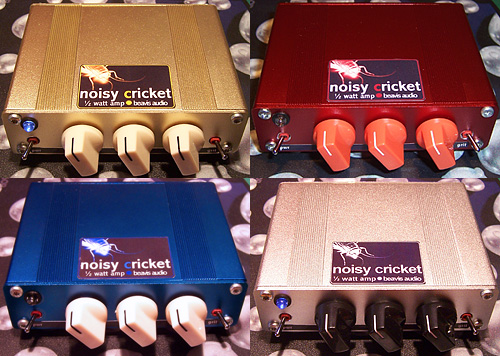
Having shown the one of the production units to some local dealers, and based on emails from folks about missing out on the first run, I decided to do a second production run. I did about 20 of these. The only change is that replaced the power on/off toggle switch with a more intuitive switch/volume knob combination. As with the previous run, there were be lots of color/finish/knob variations. Here's the prototype for production run 2:
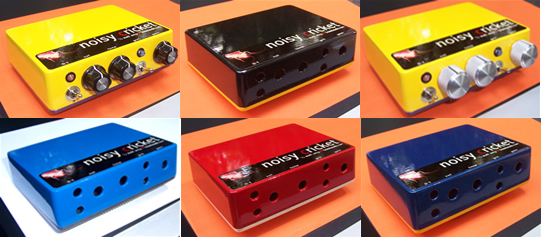
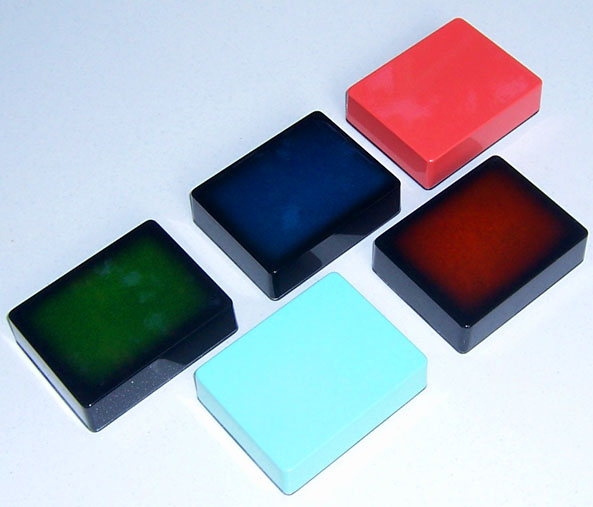
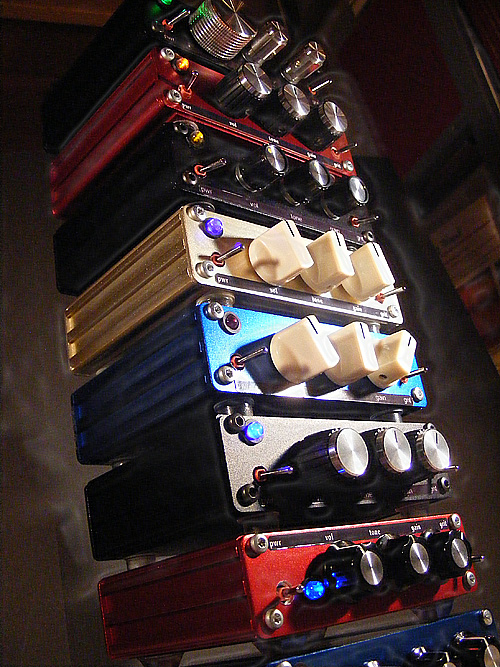
The indomitable Adam at Swankbox has provide me with a set of beautifully painted enclosures. A run of ten of those will also be part of production run 2. The following pictures don't do justice to these boxes--they are simply fantastic.
The Noisy Cricket Mark II
For this version, I wanted to leave the circuit intact, but work with a custom PCB and board-mount parts. The result, is this:
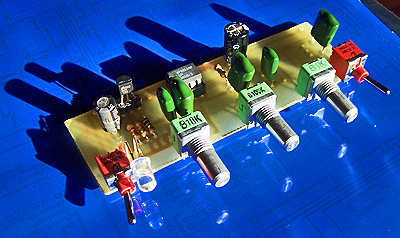
I found some great enclosures from Boxenclosures.com and went to work. The Mark II was fun to build and there are probably about 100 or so units out there.
The Cab Version
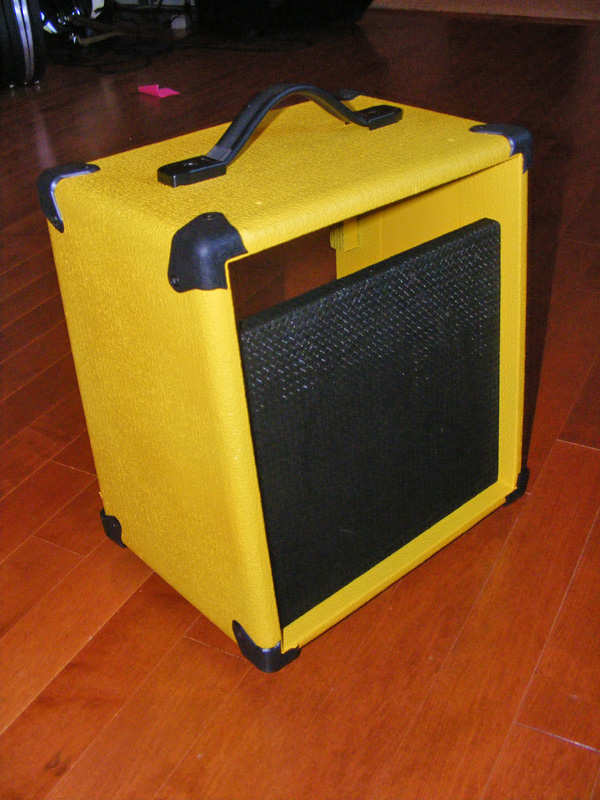
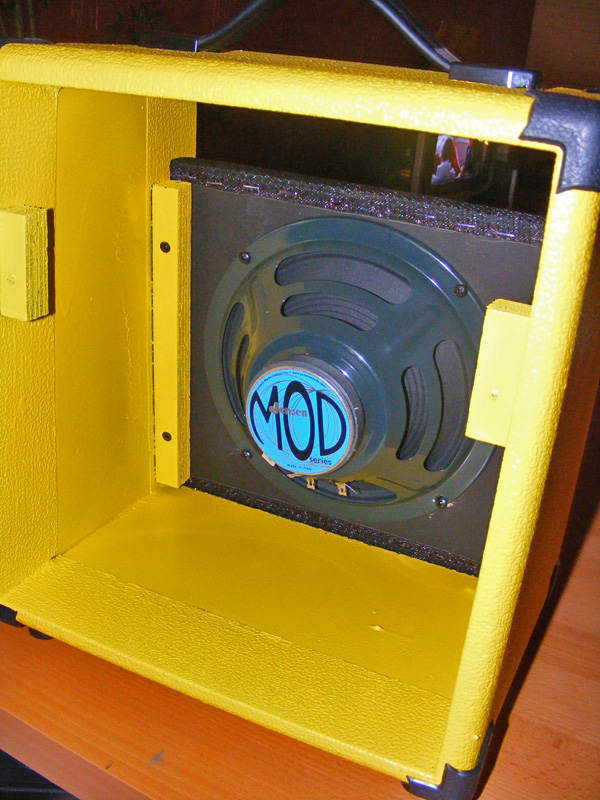
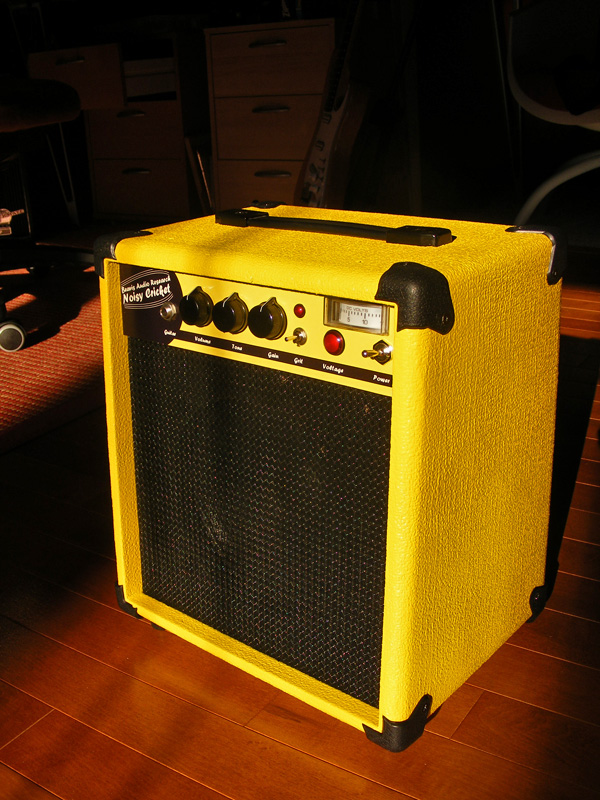
I used an old donor cab which I painted yellow and built a Noisy Cricket Mark II into it.
Various Schematics and Layouts
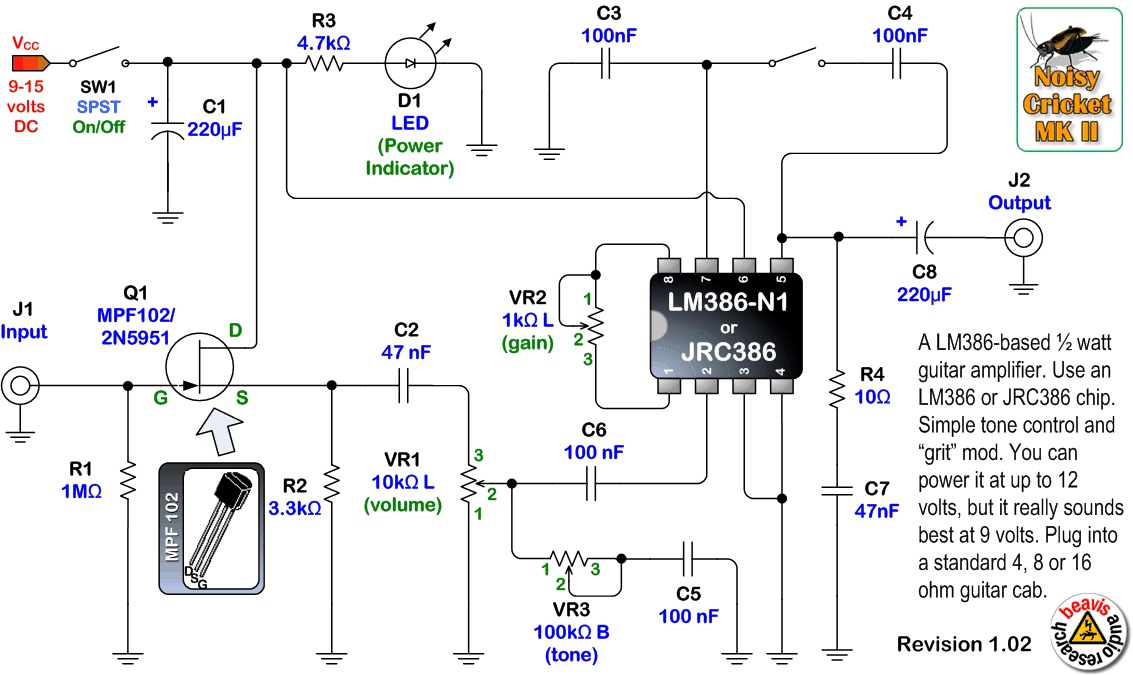
Ok, so here we have the interesting bits. How to build your own. Schematics, layouts, all that good stuff.
Noisy Cricket Mark I/II
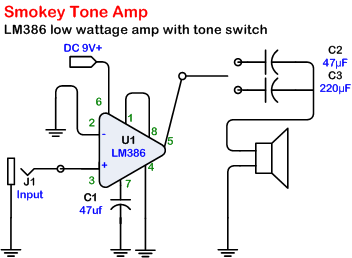
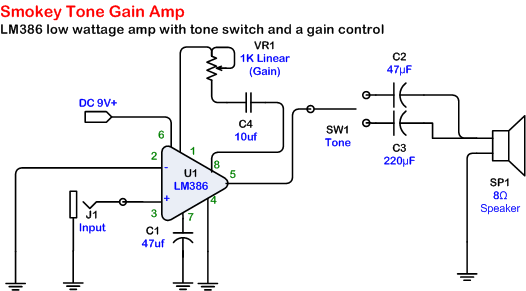
Related 386 Amp Schematics
Noisy Cricket Mark II PCB Layout and Project Guide
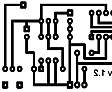
Here's a PDF that includes the PCB transfer image, parts list, parts placement and general notes for build your own Noisy Cricket Mark II.Noisy Cricket Mark II PCB Layout and Project
Radio Shack Protoboard Build Guide

I figured it would be a good idea to figure out how to build a NCMII on one of those Radio Shack general-purpose PCBs. They are available ($2.50 for 2!) at almost every Radio Shack and you don't have to etch, cut, etc. So here's a handy build guide showing the info you need to build your own cricket without etching boards. PDF Version

This work is licensed under a Creative Commons Attribution-NonCommercial-ShareAlike 4.0 International License.